
Innovative Approaches to Stopping Lung Cancer Metastasis: Nidhi Yadalam's Groundbreaking Project
12/29/20252 min read
Introduction to Nidhi Yadalam’s Research
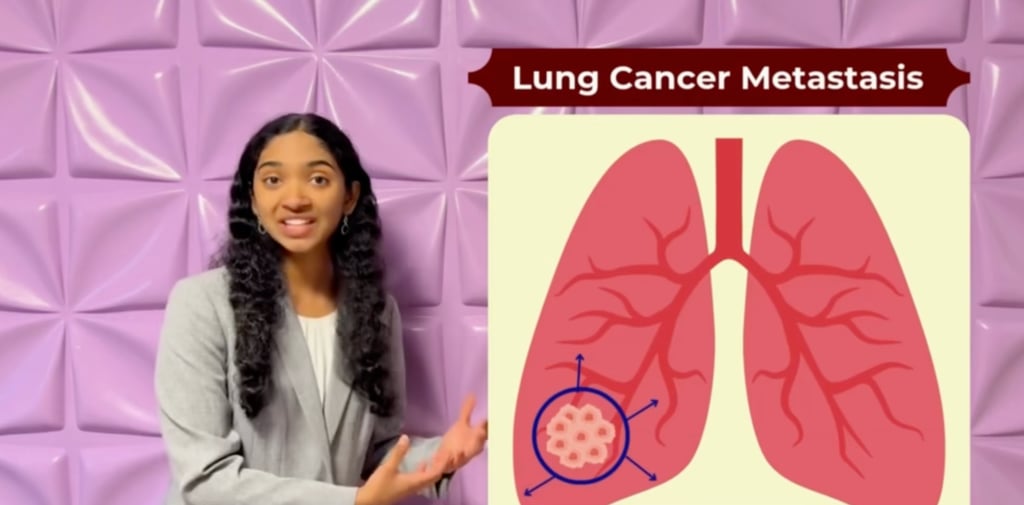
Lung cancer remains one of the leading causes of cancer-related deaths worldwide, with early detection and treatment being pivotal for patient prognosis. What if we could stop lung cancer before it spreads? This question prompted Nidhi Yadalam, a student at Jesuit High School in Portland, to embark on a revolutionary project titled "AI-Driven Nanomedicine for Predicting and Suppressing Lung Cancer Metastasis." Nidhi's work exemplifies how innovative technologies can potentially reshape cancer treatment and enhance patient outcomes.
The Power of Spatial Transcriptomics
At the forefront of Nidhi's project is the development of a spatial transcriptomics pipeline that can predict the metastatic potential of lung cancer directly from the primary tumor site. This advancement seeks to minimize the need for secondary biopsies, a process often fraught with challenges and complications. By analyzing gene expression patterns within the tumor environment, Nidhi's methodology could enable clinicians to make more informed decisions regarding treatment plans without invasive procedures, thereby improving patient comfort and outcomes.
Machine Learning Models and RNA-based Therapeutics
Nidhi has also incorporated sophisticated machine learning models, including neural networks, autoencoders, and clustering techniques. These models are instrumental in uncovering metastatic gene signatures with remarkable accuracy, offering a promising avenue for targeted therapies. Furthermore, her research features an ML-guided lipid nanoparticle design pipeline focused on RNA-based therapeutics aimed at targeting these pathways. This innovative approach holds great potential to deliver effective treatments directly to cancerous cells while preserving healthy tissue.
In Vitro Validation of RNA-based Treatments
One of the critical aspects of Nidhi's project involves in vitro validation of her RNA-loaded nanoparticles. Initial results demonstrate outstanding stability, high encapsulation efficiency, and biocompatibility, significantly enhancing the prospects for therapeutic applications. These findings are crucial as they affirm the design's efficacy and pave the way for future clinical trials. The successful encapsulation of small interfering RNA (siRNA) is vital for knocking down specific genes implicated in cancer progression, thereby addressing the challenge of metastasis effectively.
Conclusion
Nidhi Yadalam's project represents a bold venture into the application of AI and nanomedicine in the fight against lung cancer. By leveraging modern technology, her research not only seeks to predict cancer spread but also aims to eradicate it at its source before it metastasizes. As we continue to explore innovative strategies like these, the dream of preventing lung cancer from spreading could soon become a reality. With young innovators like Nidhi leading the way, the future of cancer treatment looks promising.
Empowerment
Join us in the fight against pediatric cancer.
Support
Join the fight against cancer
contact@kidscancerfoundation.org
203-340-1122
© 2025. All rights reserved.
Kids Cancer Foundation is a registered 501(c)(3) nonprofit organization (EIN: 39-3142415).