
Harnessing AI Against Cancer: A Breakthrough in Telomerase Inhibition
12/28/20252 min read
Introduction
Cancer research has long been at the frontier of scientific innovation, pushing the boundaries of what is possible in medical therapy. Among the many avenues being explored, artificial intelligence (AI) is emerging as a revolutionary tool against one of the most persistent challenges in oncology: telomerase. This enzyme is linked to the immortality of cancer cells, giving rise to tumors that resist standard treatments. In this context, we examine the groundbreaking work of Srinidhi Karthik, a rising senior at South Windsor High School and regional co-director for Connecticut at the Kids Cancer Foundation, who is leveraging AI to develop new strategies to inhibit telomerase.
Project Overview
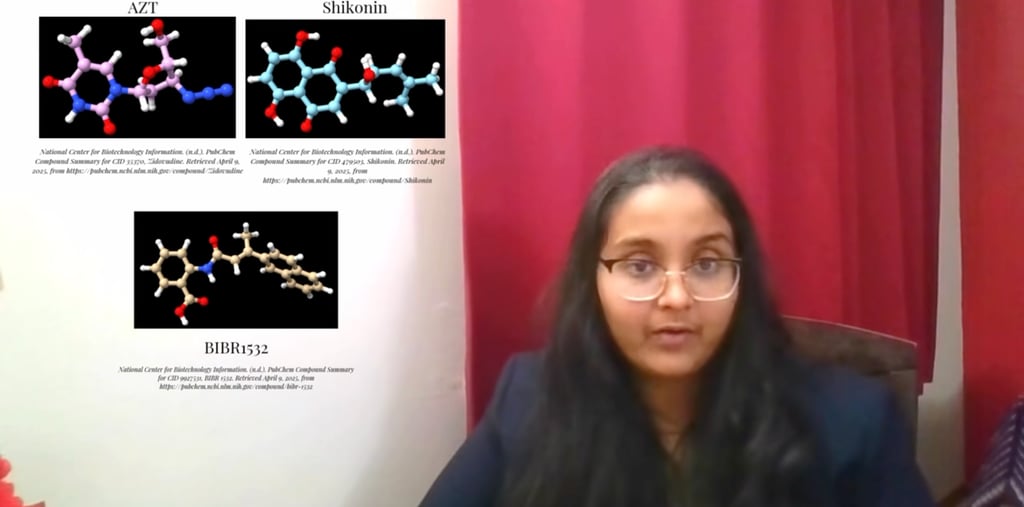
In her ambitious project titled "Accelerating Cancer Therapy Through AI-Optimized Telomerase Inhibition, Enzymatic Targeting, and the Suppression of Metastasis," Karthik has utilized cutting-edge technology to take a novel approach against cancer cells that never die. Her methodology revolves around creating new ligands designed to target telomerase with enhanced precision. By collecting existing data on ligands and telomerase activity, she trained an AI model to recognize patterns and make predictions on effective molecular interactions.
Employing AI for Drug Discovery
The process begins with large datasets that encompass both ligand characteristics and the biochemical properties of telomerase. With this information, Karthik applied molecular docking techniques, which is a computational method used to predict the optimal fit between a ligand and its target protein. This crucial step allows for the evaluation of binding affinity and stability of potential drug candidates.
Through AI-driven analysis, Karthik has generated innovative ligands that exhibit improved structural properties over conventional inhibitors. These newly designed ligands not only promise to enhance the efficacy of treatments but also may lead to reduced side effects, as they are optimized for better specificity to the cancer target.
Future Implications and Conclusions
The implications of Karthik's work are vast. By integrating artificial intelligence into cancer therapy, researchers can speed up the drug discovery process and create more powerful therapeutic agents against cancers characterized by telomerase activity. Moreover, the approach taken by Srinidhi could pave the way for future research into other critical oncogenic pathways, amplifying the role of AI in medical science. In conclusion, as we stand on the brink of significant advancements in cancer treatment, it is evident that artificial intelligence holds the key to unlocking new weapons against cancer cells. Karthik’s pioneering efforts may well signify a turning point in our battle against this formidable disease, illustrating the potential that young scientists have in reshaping the landscape of medicine.
Empowerment
Join us in the fight against pediatric cancer.
Support
Join the fight against cancer
contact@kidscancerfoundation.org
203-340-1122
© 2025. All rights reserved.
Kids Cancer Foundation is a registered 501(c)(3) nonprofit organization (EIN: 39-3142415).